Overall Rating: 4.0
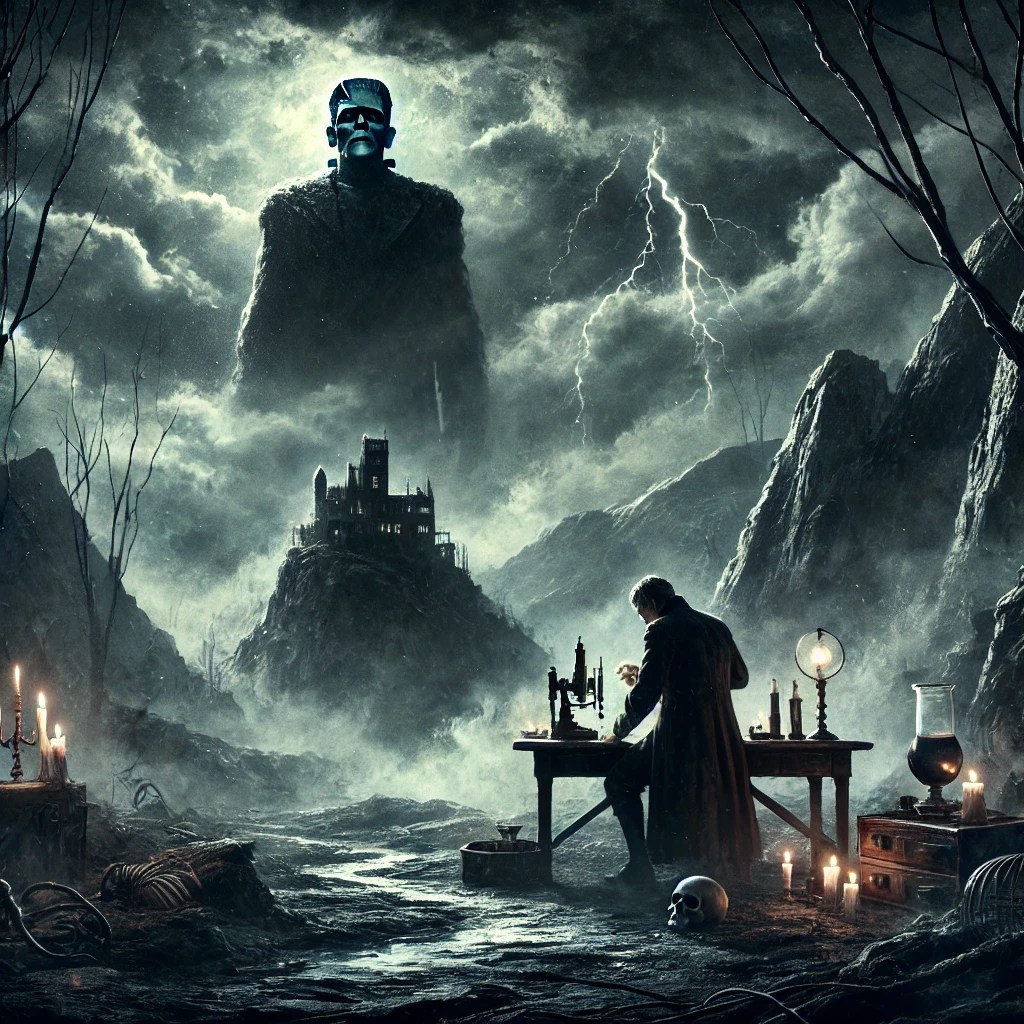
I’m going to be honest—I didn’t just pick up Frankenstein to see bolts-in-the-neck, roaring monster action. This book dives into some deep waters I wasn’t expecting. For one, the story behind the story is almost as fascinating as the actual plot. Mary Shelley, at age 18, was basically challenged to a summer-long “spooky story showdown” by her husband Percy Shelley and Lord Byron. I mean, talk about dinner conversations on steroids. Imagine being at that table, the wine flowing, and the stakes being set: Who could create the best ghost story? And Mary, this young woman hanging with literary giants, came up with Frankenstein. The seed of the story—a scientist pushing the limits of life itself—was like a lightning bolt (literally and figuratively) that has sparked fascination for over two centuries.
As I read, I got drawn in by Mary Shelley’s depiction of Victor Frankenstein’s and what kind of scientific mind would result in the ultimate creation of the monster. This guy was ambitious and obsessive to the point of delusion. You can also tell that Shelley was heavily influenced by Paradise Lost, making Dr. Frankenstein a modern Prometheus, bound for greatness (or doom). We see this as Victor charges full steam ahead with his experiments, and then bam! he’s got a full-grown creation he didn’t quite think through. It’s like the classic “look what I made!” moment—except this “kid” is eight feet tall and really, really angry.
One of the best twists for me? The creature can talk. And not just any kind of talking—this dude communicates like he’s writing a dissertation. He’s articulate, philosophical, even eloquent. Victor’s creation doesn’t just grunt and stomp; he’s more introspective than half the actual scientists in the story. Shelley gave him this voice, and suddenly, he’s not just a monster anymore. He’s a tragic figure. Here’s a creature brought into a world that hates him on sight, abandoned by his creator, yet still searching for understanding. It shocked me, honestly, to see how closely he mirrored Victor himself, minus the fancy degree and society’s approval. It’s like they’re two sides of the same tortured coin.
And then there’s this whole side plot that practically forced me to reevaluate who the “villain” really is. The monster, who’s lived in utter isolation, finally corners Victor and strikes a deal: make him a female companion, and he’ll leave humanity alone. But Victor, true to form, chickens out halfway. Suddenly he’s overwhelmed by the ethical implications of creating another creature. What if they have kids? What if his creation becomes a species? Victor is so tangled up in his god complex and fear that he refuses to acknowledge the agony inflicted on his creation.
Ultimately, Frankenstein is like a case study in what happens when you play God with no follow-through. Shelley didn’t just create a monster; she gave us a mirror, reflecting humanity’s obsession with control, knowledge, and its total lack of accountability when things go south. Victor tries to outrun his creation, but it’s really himself and his past actions that he will never escape.
Reading Frankenstein, I found myself ping-ponging between whether or not I should sympathize with the created monster. It’s a story as much about science as it is about ego, loneliness, and what it means to be responsible for the things we bring into this world. The whole thing’s a cautionary tale wrapped in a gothic fever dream, and it’s no wonder it’s still sparking debates today. Mary Shelley—at 18!—gave us a monster that refuses to stay in the grave.



 MindMuscleInk
Leave a comment