Deep Review · Rating: 4/5
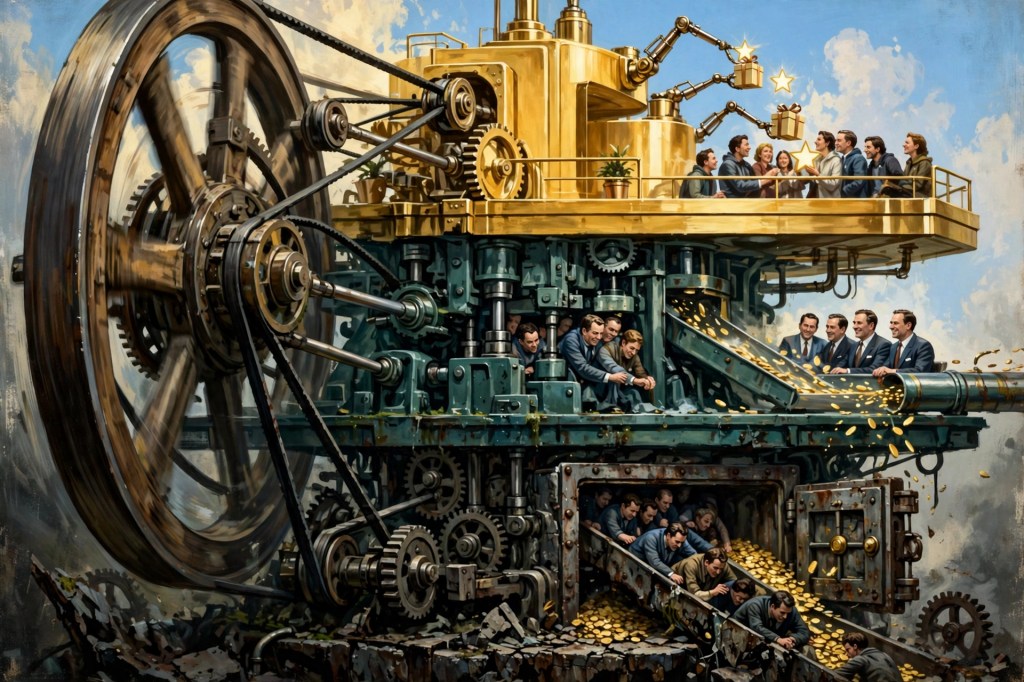
Every platform you love is a great bar that got bought.
You know this bar. When it opened, the drinks were cheap, the bartender knew your name, and nobody was trying to upsell you into a bottle service package. It was good to you because it had to be. Then the regulars became a crowd, and the crowd became leverage, and one day you noticed the pours getting shorter and the menu quietly changing in favor of people who were not drinking there at all. Nothing dramatic happened. Nobody twirled a mustache. The place just started working for somebody else, and you were the last to know.
That is Cory Doctorow’s whole book, and he has the receipts.
Enshittification, published in 2025, takes the word he coined in 2022 and builds the full autopsy. Platforms die in three stages. First they are good to their users. Then they abuse their users to make things better for their business customers. Then they abuse the business customers to claw back all the value for shareholders. Search results rot into sponsored mush. Feeds fill with things you never asked to see. Sellers on the great marketplace pay close to half of every dollar back to the house for the privilege of being found. None of it is a glitch. It is the business model, arriving right on schedule.
Here is what makes the book dangerous, in the good way: it refuses to let you blame vibes. The standard story about why the internet got worse is a nostalgia story, things were pure once, greed ruined them, the end. Doctorow will not have it. The greed was always there, he argues, in the same concentration, in the same people. What changed was the law. Decades of mergers waved through. Competitors bought instead of fought. Regulators asleep or captured. A platform does not decay because its founders got wicked. It decays at the exact moment abusing you stops costing it anything. That is a colder and more useful idea, because cold ideas can be tested. Look at your own tools. Ask what it would cost the company if you left tomorrow, and whether they behave like they know it.
The strongest writing in the book is the mechanics. Consider twiddling: the quiet retuning of prices, rankings, and rules for each user individually, so no two people ever see quite the same store. You cannot organize against a price that only you were charged. You cannot even prove it happened. It is discrimination with plausible deniability, run at industrial scale, and once you have the word for it you start seeing it everywhere, which is either enlightenment or a curse. Possibly both. Doctorow writes like a man defusing something. Short sentences. No wasted motion. Then a detail lands and the whole room changes temperature.
My honest disagreement, because a review that only applauds is just advertising with better lighting: this is a polemic, and it knows it, and occasionally it strains. The argument is so clean that the mess of real companies, the accidents, the luck, the features that bloomed into something nobody designed, gets flattened a little on the way to the verdict. Some chapters restate the charge where they should be proving it a second way. But even the flattening serves a purpose. He is not writing a history of the internet. He is handing you a diagnostic tool and daring you to find the platform it does not fit. I spent two weeks trying. The tool mostly held.
So here is what I am stealing, and every reader who builds or buys software should steal it too: stage awareness as a reflex. When a tool you depend on gets a little worse, do not evaluate the change in isolation. Ask the only question that matters. Who did the value move to? If the answer is the advertisers, the sellers, the house, you are not watching a product evolve. You are watching it change owners, from you to them, one reasonable update at a time. And if you build the thing, the lesson runs in the other direction. Interoperability, an honest exit, rankings you cannot quietly retune: these are not features. They are the locks you install on your own worst future behavior, while you are still the kind of person who wants them installed.
Read it if you run products, govern platforms, buy them, or simply live inside them and want the unease you have been feeling to finally have a name and a mechanism. Skip it if you need your nonfiction balanced and bloodless. This book has a body count and it is not sorry.
Four stars. Not because it is flawless. Because it changed the questions I ask in rooms where these decisions get made, and books that do that are rarer than good ones.
The question I keep coming back to: what are the products in your life quietly worth to the people who own them if you stay miserable but stay? Because that number, not your satisfaction, is the one on the roadmap.
Paired review: Book Review: Dungeon Crawler Carl, Books 1–5 by Matt Dinniman



Leave a Reply